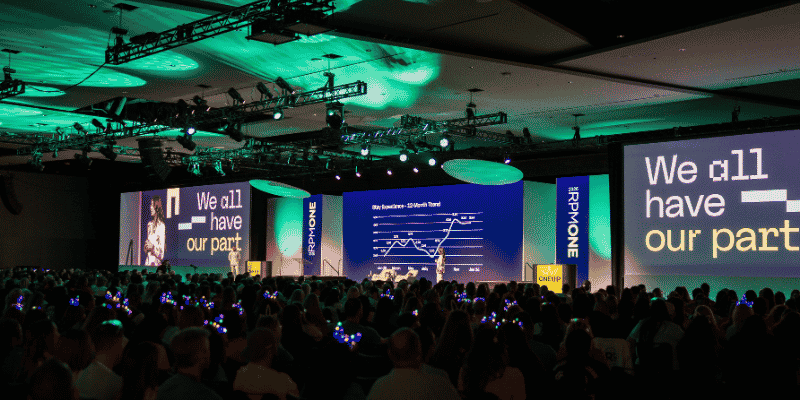


There’s a specific kind of budget meeting every corporate event manager knows. The one where finance has flagged the scenic and production line, circled it, and wants to talk about whether it could be cut in half. To them, the stage build looks like decoration — a nice-to-have that doesn’t affect the outcome of the event. To you, it’s the physical infrastructure that carries every other investment in the room.
The gap between those two views is the argument. And the argument is winnable, but only if you translate what you know into terms finance actually uses.
This guide walks through how to reframe scenic as strategic infrastructure, what metrics make the case defensible, how to scope smarter without gutting what matters, and what to bring into the conversation before it becomes a cut.
Why Finance Keeps Getting This Wrong (And Why It’s Not Entirely Their Fault)
Finance leaders are trained to distinguish between operational spend and discretionary spend. Scenic sits in a strange middle zone — it looks aesthetic, so it reads as discretionary, but it functions structurally, so cutting it has cascading operational consequences that don’t show up on the invoice.
The case for scenic often gets made in aesthetic language — words like “impact,” “wow factor,” “elevated” — that don’t translate. Tell a CFO the stage will look great and you’ve handed them a subjective claim they have no reason to accept. Tell them the stage is the delivery mechanism for the $400K you’re spending on speakers, content, travel, and attendee time, and you’ve reframed the conversation.
The fix isn’t defending the stage. It’s redefining what the stage does.
What’s Actually at Stake When You Cut Scenic
A piece in Fast Company on hospitality as a business discipline captured what happens when the physical details of an experience are treated as afterthoughts. The author reflected on a two-decade-old business meeting:
“I don’t remember the valuation of the deal. I don’t remember most of the presentations. I don’t even remember many of the people who were in the room. But more than 20 years later, I still have a candle from the hotel.”
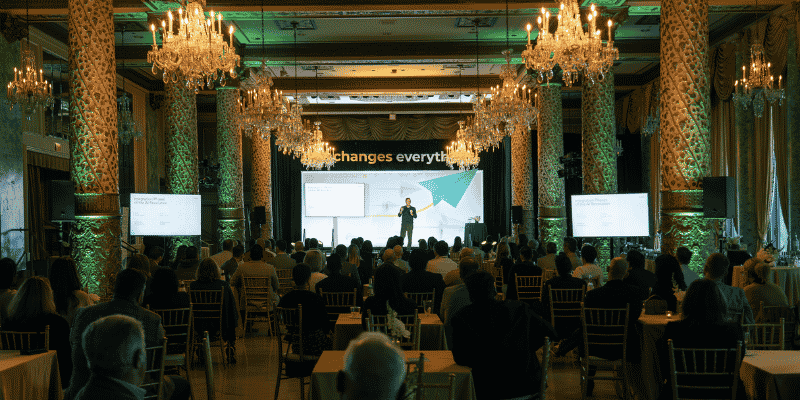
Replace “candle” with “the lighting on the keynote stage,” “the branded environment attendees walked into,” or “the moment the CEO stepped out onto a set that actually felt worthy of the announcement.” That’s what scenic does. It creates the physical detail people carry forward.
When scenic gets cut, four things typically happen:
1. The stage often can’t hold the content the way it was designed to — camera angles change, screen ratios shift, and the visual language of the show flattens.
2. AV usually has to be rescoped, because lighting, rigging, and set are specced against each other.
3. The room reads differently to attendees, which affects the perceived value of the entire program.
4. Senior stakeholders and clients in the audience form an impression of the organization’s standards in about the first ninety seconds — and that impression doesn’t get walked back.
None of that shows up on the invoice. But all of it is real cost.
How to Translate Stage Design Into a Language Finance Understands
The most useful shift is to stop presenting scenic as a line item and start presenting it as the delivery mechanism for the rest of the event budget. Here’s a practical translation exercise. Take the total event budget. Add up everything spent to get people, content, and speakers into the room — travel, honoraria, venue, F&B, marketing, attendee time. Then look at scenic as a percentage of that total. In our experience, scenic often runs as a relatively modest share of the total event spend, but it’s the physical container that determines whether the surrounding investment converts into the impression you’re paying for.
When you present it that way, the question stops being “can we cut this in half?” and becomes “what does the ROI on the surrounding investment look like if we do?”
The Metrics That Make a Scenic Budget Defensible
Finance responds to numbers finance recognizes. A few worth bringing into the room:
Attendee experience scores. Post-event NPS, session ratings, and satisfaction survey results correlate with production quality. If you have historical data showing which of your events scored highest, look at what the scenic and production investment was in each. The pattern usually speaks for itself.
Renewal and retention intent. For any event with a paid registration model, an annual conference, or a user summit where the goal is retention, attendee satisfaction ties directly to the metric finance cares about most — whether the audience comes back. That’s a defensible chain of causation.
Sustained inspiration. The challenge planners constantly face: “How do we make the energy last?” The physical environment is a huge part of the answer. Attendees who felt something in the room carry it back to Monday morning. Attendees who sat in a beige ballroom generally do not.
Cost of a cut. This is the metric planners often forget to bring. Show the CFO not just what the current scope costs, but what a mid-cycle reduction would cost in AV rescoping, layout adjustments, speaker rebriefs, and lost creative work. Mid-planning scenic cuts can frequently run into tens of thousands in rework costs — money that leaves without buying anything.
How to Scope Smarter — Without Cutting What Actually Matters
The most productive version of this conversation isn’t defensive. It’s collaborative. Once finance sees scenic as infrastructure, the question becomes where the build can flex without compromising the moments that matter most.
A good scope review identifies:
- Where scale is doing real work vs. where it’s habit. Not every event needs a full 40-foot LED wall. Sometimes it does. Sometimes a smaller, more considered build actually reads better on camera and in the room.
- Where reused assets can carry. Modular scenic elements, brandable set pieces that work across multiple events in a program, and lighting rigs specced for recurring use can bring the amortized cost per event down substantially.
- Where the moments live. In most general sessions, two or three specific moments — the opening, the CEO walk-on, a product reveal, an awards moment — carry the emotional weight of the event. Scenic and lighting investment should concentrate there. Everywhere else, restraint is fine.
- Where the content actually asks for the build. If a speaker’s content lives entirely on screen, the set can be simpler. If the content is about the brand or the room, the environment has to do the work.
This is the kind of review a production team who already knows your program can do quickly, because they’ve seen what works in your rooms. Starting over with a new partner every year means starting over with this analysis every year — which is expensive in a different way.
What to Bring Into the Budget Conversation (A Practical Checklist)
Before the meeting, put together:
1. Total event budget with scenic as a percentage of the whole. Frames scenic as a share of a larger investment, not a standalone number.
2. The list of what scenic is the delivery mechanism for. Speakers, content, brand launch, sponsor visibility, attendee experience — whatever applies.
3. Historical NPS or attendee satisfaction data, tied to prior scenic and production investment levels if you have it.
4. The cost-of-cutting analysis. What breaks if this is reduced, and what does rescoping cost in labor.
5. The audience composition. Who is in the room? If it includes clients, investors, board members, or press, the production standard is a signal about the organization to people whose opinion has material value.
6. Two or three specific moments the scenic investment is protecting — the ones that would be visibly diminished by a cut.
7. A scoped alternative. Not a defense of the current number, but a proposed “flex” version showing where the build can breathe if a reduction is genuinely necessary — and where it can’t.
Walking in with those seven things changes the meeting from a defense to a conversation.
Why Institutional Memory Makes This Meeting Easier
The planners who navigate scenic-budget pressure most effectively tend to have one thing in common: a production partner who’s been on the account long enough to know the program, the stakeholders, and the standards without being briefed each time. That institutional knowledge is what makes the pre-budget-meeting analysis fast, credible, and defensible.
The alternative — venue-captive AV assigned by the property, or a new production partner cycled in each year — means starting the analysis over every time. Nobody in the room remembers what last year’s scenic actually cost, what worked, or what a mid-cycle cut broke. The historical data that makes the case for finance simply doesn’t exist in a form anyone can pull.
That’s the model that makes budget conversations easier. The production team knows what a cut would actually cost you, because they’ve watched it play out in your rooms before. They can help you build the case proactively, before finance sees the number and reaches for a red pen.
If you’re heading into a scenic-budget conversation and want a second set of eyes on how to scope, what to defend, and where the flex actually lives — Talk to Our Team. We’d rather help you win the argument than watch a good event get thinned out mid-cycle.

Cindy Chea is the Content Specialist at Meeting Tomorrow. Whether it’s design, research, social media, or writing, she loves all things content and applying it to the world of events. A digital storyteller at heart, she thrives on transforming complex information into engaging, visual stories. At Meeting Tomorrow she helps ensure brand consistency across our platforms and develops creative content solutions for our team and the event professionals we support. When she’s not editing or looking for event inspo, you can find her journaling in a coffee shop or searching for the best bread basket in Philly.