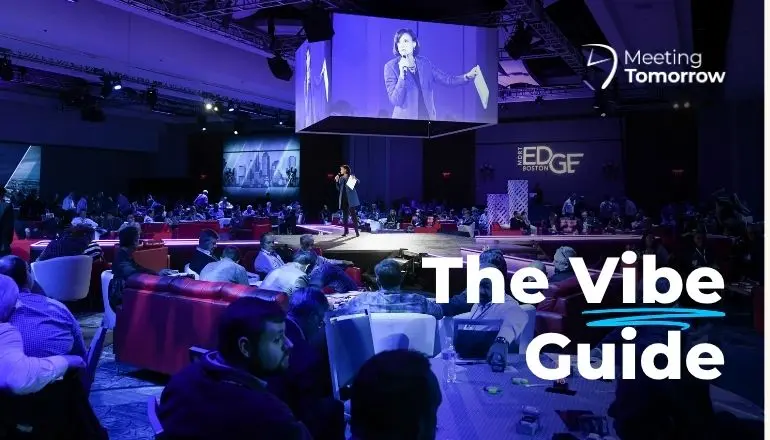
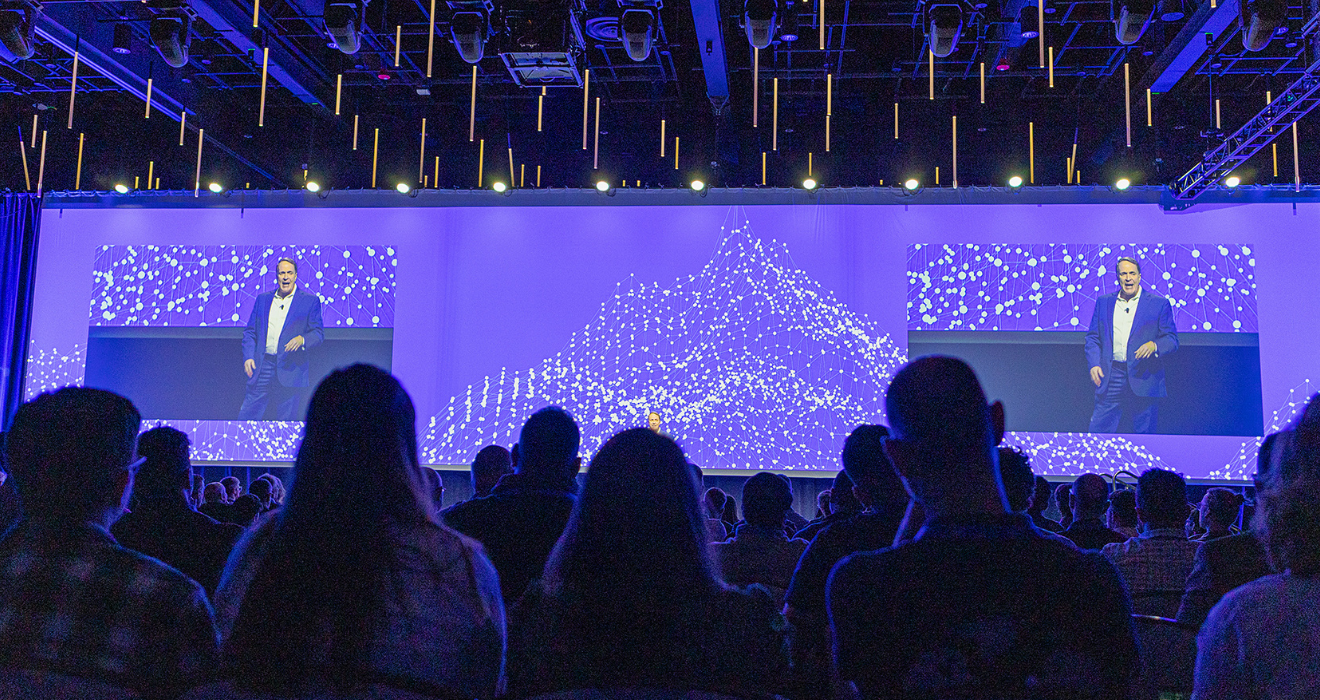
Attendee expectations for design coherence are rising. Julius Solaris’s Experience Design Report 2026, unpacked recently on TSNN, makes the case that audiences now read an event’s visual and experiential coherence as a proxy for the brand’s operational integrity. Which means the gap between what your creative agency designed and what actually shows up in the room is no longer an internal logistics problem. It’s a brand problem your attendees can see.
Most enterprise event programs are still organized around a structural split: a creative agency owns the brand vision and the deck. A separate production company — sometimes two or three across cities — owns the build. The marketing director sits in the middle, translating. That middle seat is where brand edge gets quietly negotiated away.
In this piece, we’ll dive into the seam between those two organizations, what it actually costs, and what the alternative looks like when the team that designs the brand expression is the same team that builds the room.
The Moment Brand Intent Becomes Someone Else’s Interpretation
There is a specific moment in every event program where the brand stops being a design decision and starts being a build instruction. It usually happens when the creative deck — color palette, stage architecture, signage spec, lighting intent, attendee flow — gets handed to whoever is producing the room.
Behind that creative deck are countless conversations and hours of strategizing over each visual element to make sure the brand’s identity is being communicated in the best way. This includes everything from the color choices and the spacing rational, to the reason the keynote stage was supposed to feel intimate rather than presentational.
When the creative deck gets handed to the production team, they read the deck, scope the gear, and build what they can build with the time and budget they have, and often times the original intent gets lost.
One marketing director put it cleanly in a conversation we had earlier this year: “I love my creative agency’s brand work, but I’m tired of being the translator between their decks and whoever’s actually building the room.”
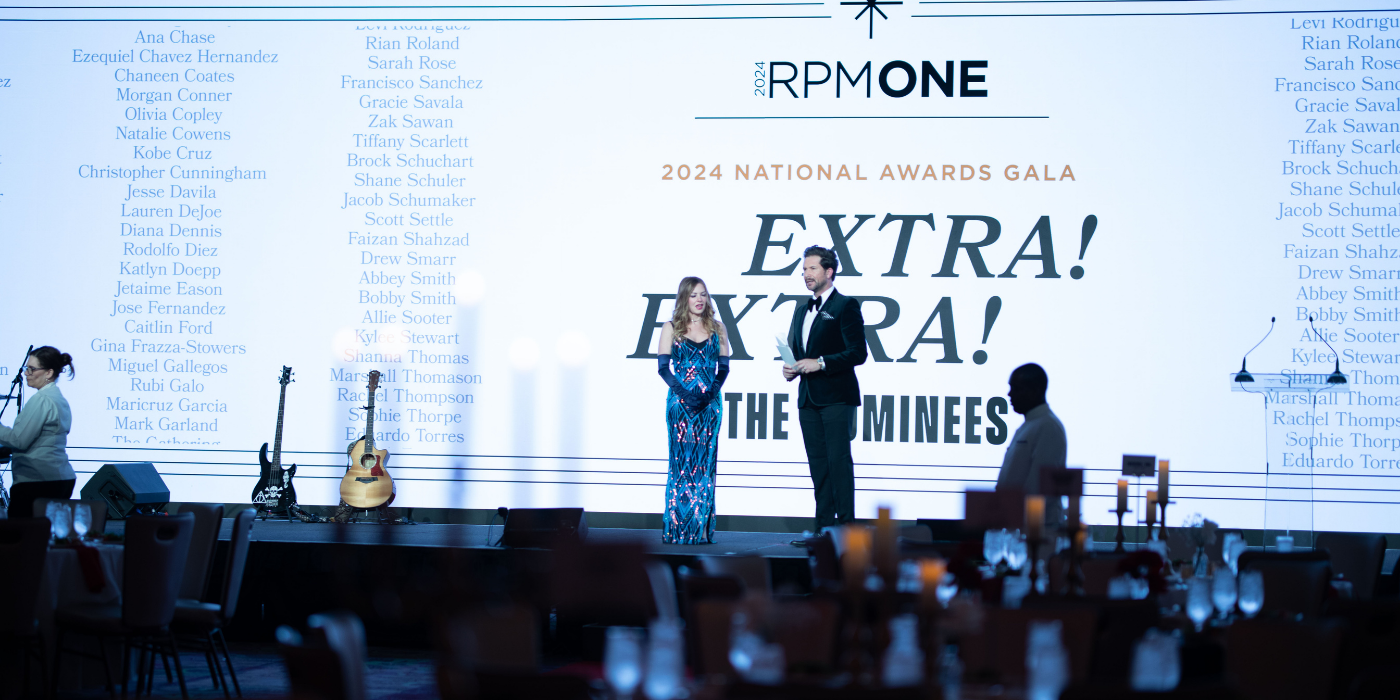
How the Agency-to-Production Handoff Actually Works (And Where It Breaks)
The standard model has a predictable five-step chain:
1. Creative brief from the brand team.
2. Concept and deck from the creative agency.
3. Production RFP issued to one or more production partners.
4. Subcontracted AV, lighting, scenic, and labor — often different vendors in different cities.
5. Load-in, where someone on site interprets the deck for the room they’re actually standing in.
Each handoff is a fidelity loss. Step 2 loses the conversation the brand team had with the creative agency. Step 3 reduces the deck to a spec sheet. Step 4 introduces vendors who weren’t in the original briefing. Step 5 is where the lighting designer, who has never spoken to the creative director, makes a judgment call about whether the keynote backdrop should feel warmer or cooler — and goes with their instinct.
For a single event, the loss is recoverable. The marketing director catches it at rehearsal, sends a Slack to the agency, gets a revised reference image, walks it to the lighting team. The room ends up close enough.
For a recurring program — an 8-city roadshow, a regional SKO series, an annual user conference plus three executive summits — the loss compounds. Each city is another handoff, another set of interpreters, another conversation the marketing director has to have personally because no one else has the full picture. Smart Meetings, writing about a 2,800-guest Diwali corporate showcase, made a related point about large-scale execution: “The truth of large-scale corporate catering is that the chaos lives in the prep window, and the calmest day in the operation is the day of the event itself, if you have built the architecture correctly underneath it.” The architecture is the point. When the architecture has a seam in it, the seam shows up under load.
What Enterprise Marketing Directors Lose When Two Teams Own the Same Event
There are three things that marketing directors tend to lose when two teams are on the same event:
Time. The translator role is unbudgeted labor. In our experience, a marketing director running an 8-city roadshow can spend considerable hours per city closing the gap between agency intent and production execution. Across a program, that’s a part-time job no one accounted for.
Consistency. When city one is interpreted by production team A and city five is interpreted by production team B, the brand drifts. Attendees who go to both notice. So do internal stakeholders who see the recap reels.
Accountability. When something visibly underdelivers — the stage feels off, the signage hierarchy doesn’t read, the lighting flattens the keynote — the agency points at production, production points at the deck, and the marketing director owns the outcome to leadership alone.
Don Jeter, CMO at Torq, made a related observation in Event Marketer’s 2026 Fab 50: “If you’re not putting on a show, you’re just paying for a spot on the carpet.” Jeter is talking about trade show presence, but the underlying logic applies upstream. If the brand expression doesn’t survive contact with the room, you didn’t put on a show. You paid for a setup.
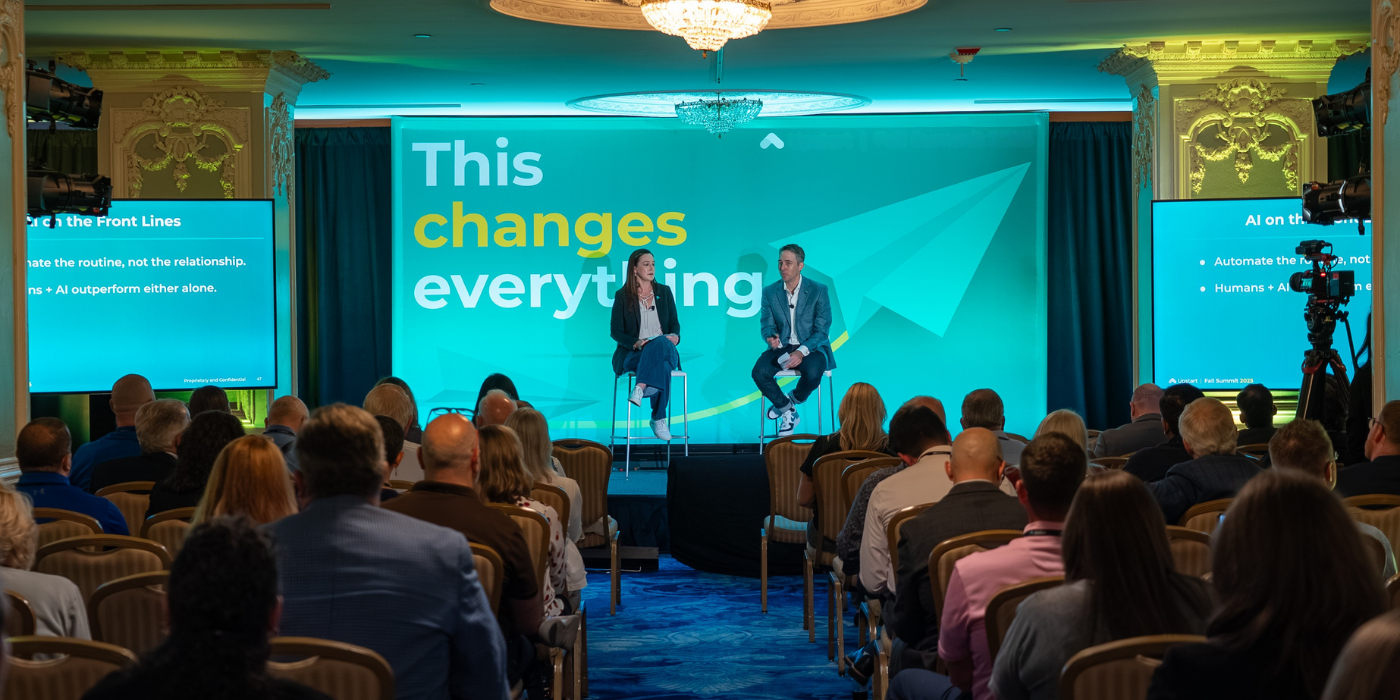
The Structural Fix: When the Design Team and the Build Team Are the Same People
The alternative is not better coordination. Better coordination is what the handoff model already promises and rarely delivers. The alternative is removing the coordination layer entirely — having the same team own the creative brief and the production execution from kickoff to post-event debrief.
That’s the model we’ve built at Meeting Tomorrow. Our creative and production teams sit inside the same account relationship. When a client briefs the creative side on a stage concept, the production side is in the room. When the production side flags a venue constraint, the creative side adjusts in real time. There is no deck-to-build translation step because the people designing the deck are accountable for the build.
How to Audit Your Own Event for Handoff Risk
A short self-audit, based on what we see in client conversations:
- How many separate organizations are involved between the creative brief and load-in? Count creative agency, production company, AV subcontractors, scenic vendor, lighting vendor, logistics. Three or more is a handoff-heavy program.
- Who, by name, is accountable if the stage doesn’t match the deck? If the answer is “depends on what went wrong,” that’s the seam.
- How many hours per event does someone on your team spend translating between creative and production? If the number is non-zero and you haven’t budgeted for it, you’re absorbing the cost personally.
- In a multi-city program, are the same production leads on every city, or does the team change? Different teams per city is the most common single source of brand drift in roadshow programs.
- Who owns the post-event debrief? If creative and production debrief separately, the institutional learning splits in two and neither team gets the full picture.
None of these questions are rhetorical. They’re the questions we ask in a first conversation with a marketing director who is evaluating whether to consolidate.
What Integration Actually Looks Like in Practice
In practice, integration is undramatic. There is no separate creative kickoff and production kickoff. There is one kickoff, with the people who will be on site in the room. The deck is a working document the production team has commented on. The site visit includes the lighting designer. The brand standards live in the same Slack channel as the load-in schedule.
Amanda McCoy, COO at The Financial Brand, described it from a client vantage point: “They were an extension of our planning team and put in as much care as our employees do. Couple this with the flawless onsite production and ability to pivot no matter the curve ball thrown — we simply couldn’t imagine working with anyone else.”
For a roadshow, integration means the same account lead, the same creative director, and the same production lead across every city. The setup process in Charlotte is the setup process in Chicago. Brand drift becomes architecturally hard rather than constantly fought against. For an annual conference, it means the team that designed last year’s general session is the team that designs this year’s — the brand isn’t being re-explained every 12 months.
Is the Seam Costing You More Than You Think?
For a single event, the handoff seam is recoverable. For a recurring program, it isn’t. It shows up as drift, as unbudgeted translator hours, as accountability gaps, and as the slow erosion of the design coherence Solaris flagged as a rising attendee expectation.
The question worth asking, before the next planning cycle starts, is how many people are currently translating between your creative vision and the people building the room — and what each translation is costing you in time, consistency, and brand edge.
If you’re rethinking how your event program is structured for 2026 and 2027, Talk to Our Team. We’d rather have the audit conversation early, before the briefs go out, than after the recap deck shows the drift.

Cindy Chea is the Content Specialist at Meeting Tomorrow. Whether it’s design, research, social media, or writing, she loves all things content and applying it to the world of events. A digital storyteller at heart, she thrives on transforming complex information into engaging, visual stories. At Meeting Tomorrow she helps ensure brand consistency across our platforms and develops creative content solutions for our team and the event professionals we support. When she’s not editing or looking for event inspo, you can find her journaling in a coffee shop or searching for the best bread basket in Philly.