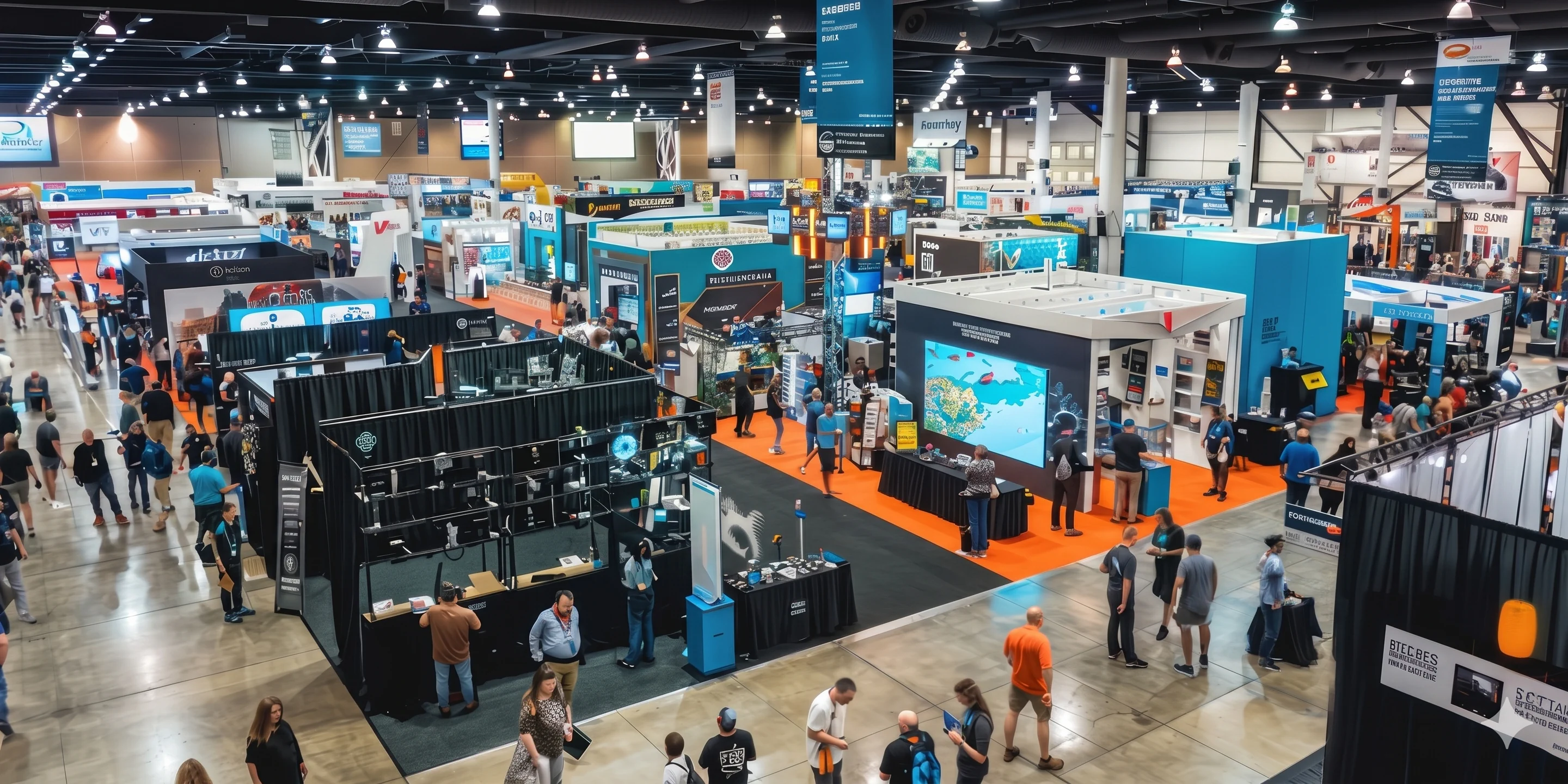


At least once a quarter, we hear some variation of the exact same frustration from event directors who reach out from running multi-city programs:
“Our flagship event was incredible in New York and a hollow shell by Phoenix, and I can’t tell if it’s the venues, the crews, or the design itself.”
This admission names the real problem. It’s not just that the eighth stop on the tour went badly — most planners can recover from a single bad night. The deeper issue is the inability to diagnose why it went badly. Was it the venue ceiling height? A different lighting board operator? A run-of-show document that quietly lost a transition cue between city three and city four?
Without a way to measure what actually survived from city one to city eight, every post-tour debrief turns into a guessing game. Closing that diagnostic gap requires what we call a “design fidelity score” for multi-city programs—a framework event teams can use to start tracking consistency, whether they’re working with one production partner or six.
Why Multi-City Event Design Drifts — and Why It’s Rarely the Venue’s Fault
Design drift in a multi-city program is almost never caused by one catastrophic failure. It accumulates through dozens of small, undocumented deviations that compound city by city. The screen is mounted six inches lower because the rigging point in the Phoenix ballroom is different. The lighting designer in Atlanta interprets “warm wash” two color temperatures off from the lighting designer in Chicago. The local AV lead in Dallas decides — reasonably — that a particular transition will land better with a two-second hold instead of the four-second hold the deck specifies.
None of these are mistakes in isolation. Each one is a judgment call made by someone doing their best to make the room work. The trouble is that when you string eight of these judgment calls together across eight cities, what the attendee experiences in Phoenix is no longer the experience your team designed in the kickoff. It’s a series of local interpretations of that design.
Futurist Shawn DuBravac frames this shift well in his Operator to Orchestrator framework on PCMA: planners who treat each city as a discrete logistics problem never accumulate the cross-city intelligence needed to actually improve the program. Every stop starts at square one because the lessons from the last stop never made it into the spec for the next one.
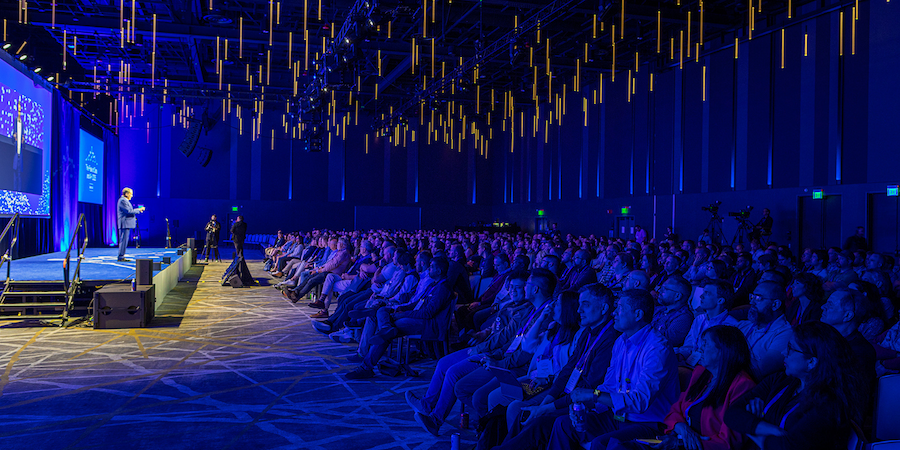
The Three Layers of Design: What Holds, What Drifts, and What Quietly Disappears
In our experience running multi-city programs, the designed experience has three distinct layers, and each one degrades at a different rate.
The structural layer. Stage configuration, rigging plot, screen size and placement, camera positions. This layer is the most resilient because it’s documented in technical drawings and physically built. Drift here is usually constrained by the venue itself — a lower ceiling, a narrower stage, a load-in door that won’t accept the truss section you used in New York.
The atmospheric layer. Lighting color and intensity, audio balance, room flow, walk-in music, transition timing. This is where most drift happens, because most of it is interpretive. “Warm wash at 60% intensity” means one thing to a lighting designer who has run the event six times and something slightly different to a designer reading the cue sheet for the first time at load-in.
The human layer. Crew familiarity with the run of show, the technical director’s relationship with the speakers, the brand language the front-of-house team uses with attendees, the small decisions stage managers make in the moment. This layer is the most fragile because it lives entirely in institutional memory. A crew that has worked your event six times handles the moments that aren’t on the spec sheet differently than a crew assembled for the first time on Monday morning.
When people say the Phoenix event “felt different,” they’re almost always describing drift in the atmospheric and human layers — not the structural one. Which is exactly the drift that’s hardest to catch after the fact, because none of it shows up in the post-show photos.
How to Build a Per-City Design Fidelity Diagnostic
A design fidelity diagnostic is a planning tool, not a scorecard for blame. The point is to catch and close drift before it compounds — to tighten the baseline before city two, not to litigate what went wrong in Phoenix. It has three components:
1. A pre-agreed baseline document, per event type. Not just a run of show. A specification dense enough that a crew running the event for the first time can reproduce the intended experience without making interpretive guesses. Lighting state values, audio reference levels, transition timings to the second, room flow diagrams, brand language scripts for front of house. The test of a good baseline document is whether a competent stranger could read it and produce a result close to your design.
2. A per-city deviation log. A short, structured record kept by the production team after every stop. What was added, removed, or modified relative to the baseline — and why. “Screen mounted 18 inches lower than baseline due to ceiling rigging point in Phoenix ballroom.” “Walk-in music reduced by 3dB at venue request.” The log is what makes drift legible.
3. A post-tour audit that compares actuals against the baseline rather than memory. The reason most teams can’t measure fidelity honestly is that the data lives in four different production teams’ heads and no one writes it down. By the time the debrief happens, everyone is reconstructing the tour from memory, which is the least reliable input available.
The diagnostic doesn’t need to be elaborate. A spreadsheet works. What matters is that it exists, it’s filled in at every stop, and someone owns reading it at the end of the tour.
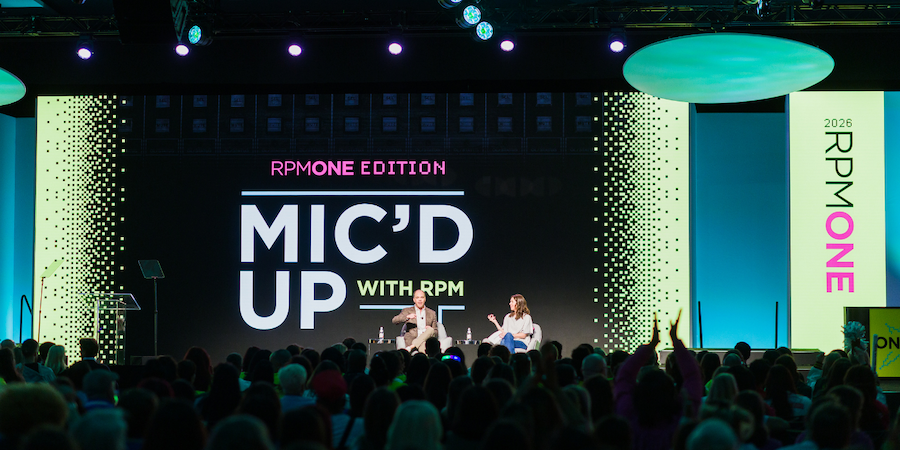
The Audit Problem: Why it’s so Hard to Measure Fidelity After the Fact
The most common reason event teams can’t answer the “why did Phoenix feel different” question is that the institutional memory of the tour is fragmented across multiple production teams who don’t share documentation conventions. A debrief call ends up being eight people remembering eight versions of what happened, with no source of truth to settle which version is accurate.
Amanda McCoy, COO at The Financial Brand, described what the alternative looks like when working with Meeting Tomorrow:
“They were an extension of our planning team and put in as much care as our employees do. Couple this with the flawless onsite production and ability to pivot no matter the curve ball thrown — we simply couldn’t imagine working with anyone else.”
The operational definition of fidelity under pressure is the ability to pivot without losing the baseline. You can only do that if the team on the ground knows what the baseline is — not because they’ve been briefed on it, but because they helped build it.
A Self-Assessment for Multi-City Event Programs
Before your next multi-city tour, walk through these questions with your team. You don’t need to score them. You just need to notice which ones you can’t answer.
- Can you name the three elements of your designed experience most likely to drift across cities? (If you can’t, you don’t have a baseline — you have a vibe.)
- Do you have a baseline document detailed enough that a competent crew could reproduce the intended experience without guessing?
- After your last multi-city program, can you tell the difference between a deviation caused by a venue constraint and one caused by a crew interpretation?
- Is there a single person — internal or partner-side — who owns the post-tour audit against the baseline?
- If you ran the same program again next year, would you have written documentation of what to tighten, or only memories of what felt off?
The questions you can’t answer are the design fidelity gaps in your current program. That’s useful information before you scope city one of the next tour.
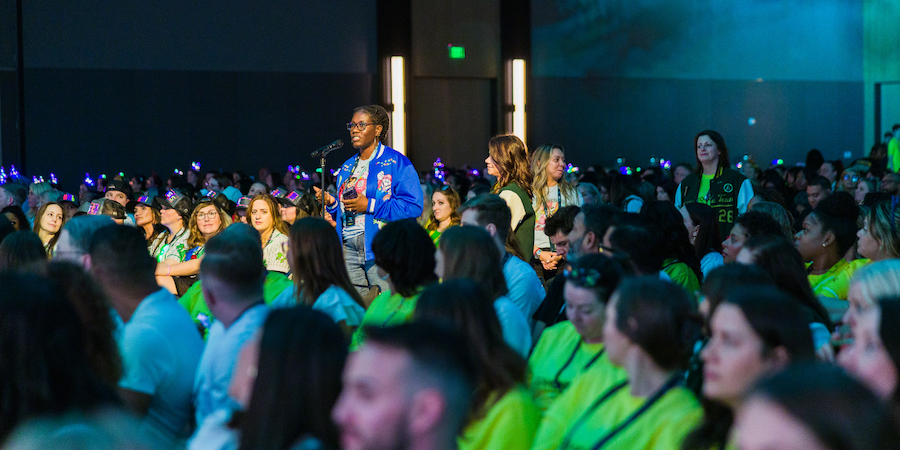
What to Look for in a Production Partner for a Multi-City Tour
The questions worth asking when scoping a multi-city program aren’t really about equipment or capacity. They’re about whether the partner can give you an auditable operational record across the entire tour.
Ask: Will the same account team be on every city, or will the team change with the geography? Who owns the baseline document, and how does it get updated between cities? What does the deviation log look like, and can we see a sample from a comparable program? After the tour, what does the audit deliverable look like — and how much of it is reconstructed from memory versus pulled from a record kept in real time?
Allyson Evancheck, Senior Manager of Event Technology & Operations at Cvent, describes our five-year working relationship in one line: “Not just a vendor — a valued partner.” Fidelity at scale is only possible when the team running the program has accumulated enough institutional memory about your standards to catch drift before it reaches your attendees. That kind of relationship doesn’t form in a single tour. It compounds, the same way drift does — only in the right direction.
If you’re scoping a multi-city program for 2026 and the Phoenix-vs-New York gap is a familiar pattern, we’d be glad to walk through what a design fidelity diagnostic could look like for your specific event type.Talk to Our Team to start that conversation.

Cindy Chea is the Content Specialist at Meeting Tomorrow. Whether it’s design, research, social media, or writing, she loves all things content and applying it to the world of events. A digital storyteller at heart, she thrives on transforming complex information into engaging, visual stories. At Meeting Tomorrow she helps ensure brand consistency across our platforms and develops creative content solutions for our team and the event professionals we support. When she’s not editing or looking for event inspo, you can find her journaling in a coffee shop or searching for the best bread basket in Philly.